Greyharbor
Aktualisiert vor 3 Wochen
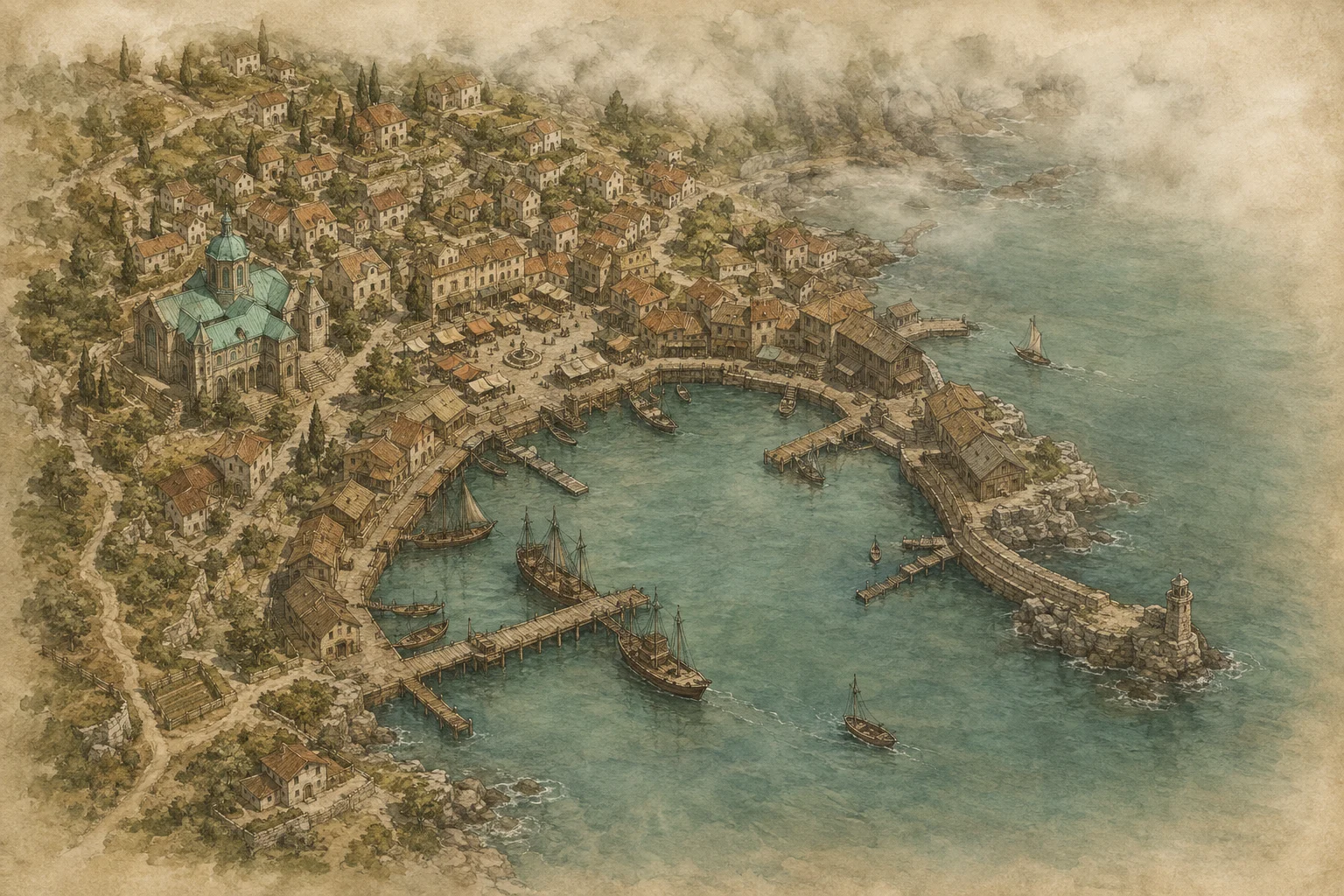
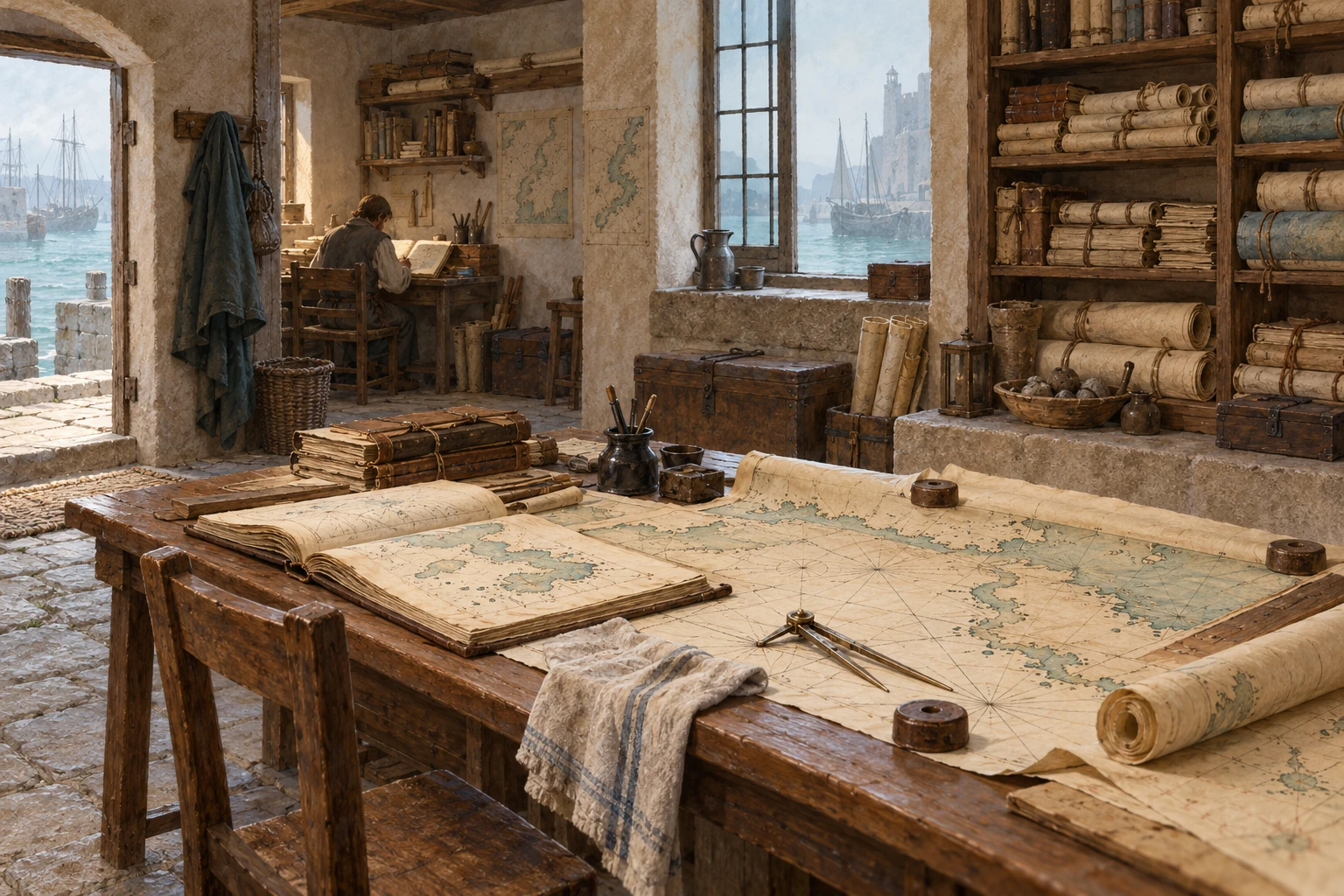
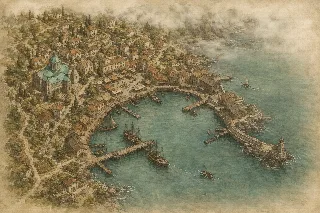
Greyharbor stands where river mist meets the coast. On a clear day, the masts are visible from the market. More often, the first signs are creaking ropes, a loose door knocking and voices whose owners appear only a few steps away. The town survives because goods, news and travelers find their way through all the same.
This is a working harbor. Fish are salted, lamps filled, sails repaired and small debts taken as seriously as large promises. Strangers can find work carrying, writing, listening or lending a hand at sea. People who waste other people's time soon discover that everything costs them a little more.
From the market to the eastern quay
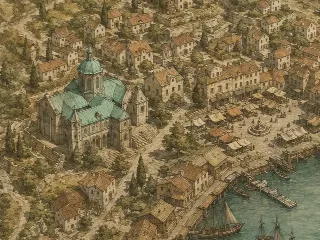
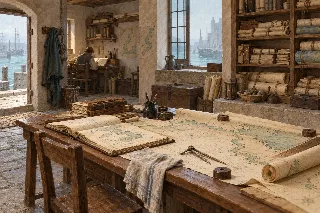
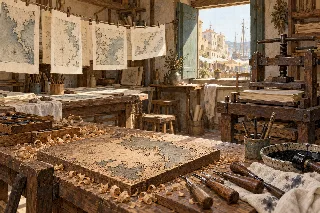
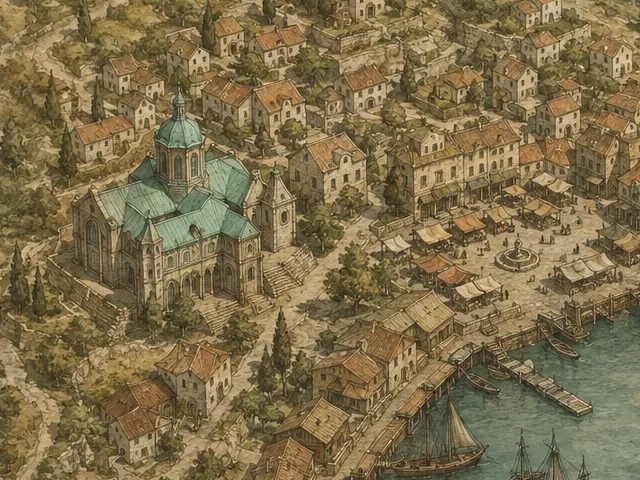
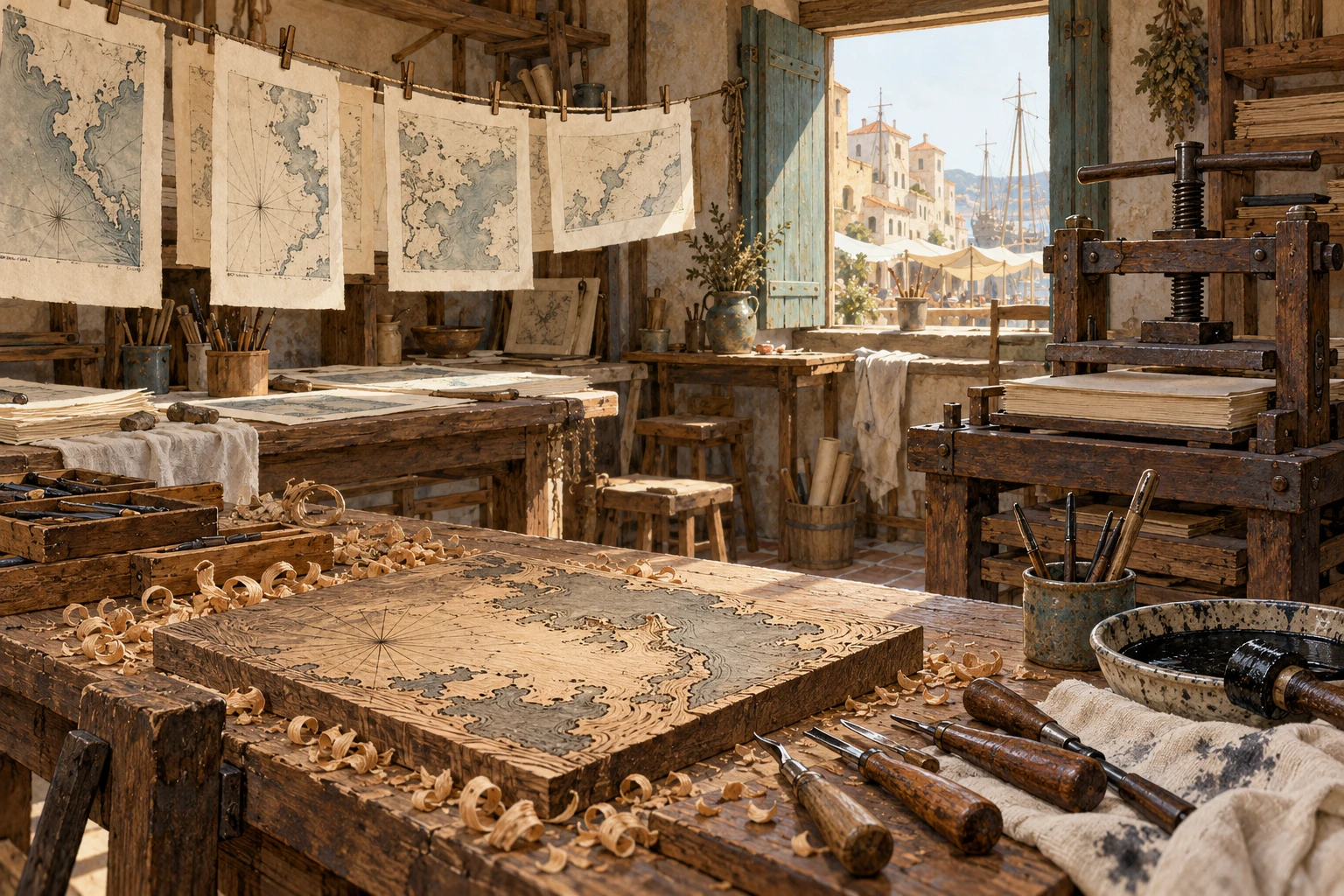
The market sits above the oldest landing steps. Rain runs through narrow channels between the stalls. At Hedda's general store, string, dry cloth and small necessities wait for people who will remember needing them just as their ship leaves. Nearby workshops print charts and engrave blocks. Alwin Fenn works among shavings and printing ink.
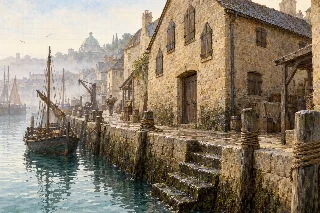
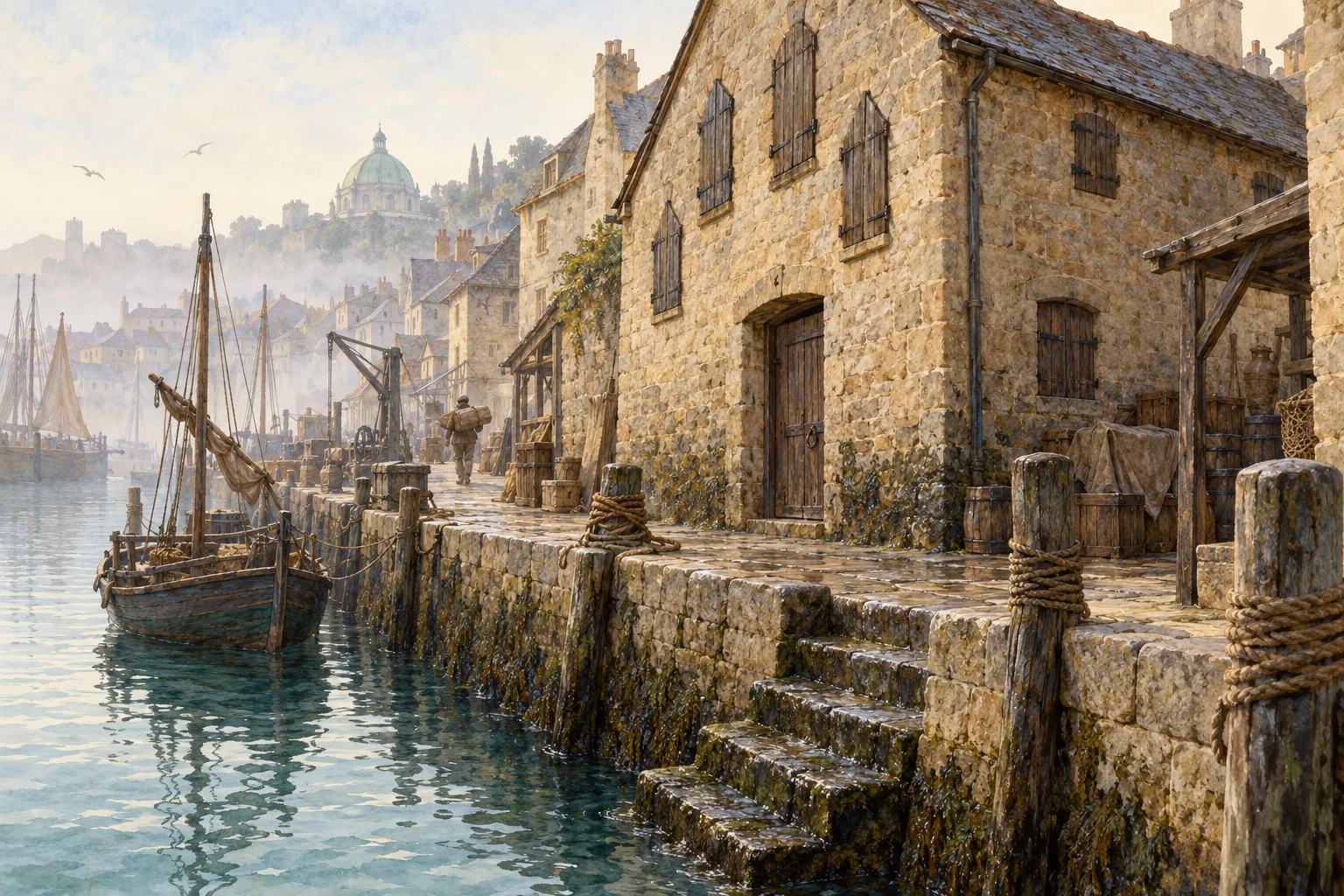
The eastern quay is narrower. Its lowest steps disappear at high water, leaving dark bands on the walls. The Old Chart Store sits directly beside the water. The Harbor Archive handles registers and inquiries, while the copper-green dome of the Archive Circle rises over the roofs. The branch and the main collection belong to the same organization but serve different purposes.
What has value here
A current coastal account can be worth more than a handsome object. Sandbanks shift, familiar marks vanish into mist and a passage does not remain safe just because it used to be. Fishers and cartographers therefore argue about more than lines on paper. They argue about who can sail, who must wait and who bears the risk of a wrong description.
That gives the Archive Circle influence without making it the ruler of the harbor. It needs the sailors' observations; the sailors need its comparisons. Families such as the Fenns connect workshops, trade, shipboard work and the Archive. Those short paths make things possible and turn professional disagreements into personal ones.
Festivals in Fogmonth
On 14 Fogmonth, the Harbor Festival fills the eastern quay with stalls, warm bread and wet rope. The Founding Days last five days instead. These are separate celebrations; someone asking about a meeting needs to establish which one is meant. Between the morning and evening bells, people trade, tell stories and keep working. A crowded quay offers many possible witnesses and many ways to mistake one person for another.
Silverlight and Saltmoon move above the town. Festival stalls hang round pale lanterns for Silverlight and flat wooden discs painted salt-white for the second moon. Children argue over which will rise above the roofs first. Along the quay, adults study the sky and repair ropes. Boats are tied more securely before the autumn storms; the losses people remember here have names and faces.
A town for the table
An ordinary errand can touch several interests: a family protecting its reputation, an archivist correcting a dangerous error, a ship's boy trying to get back aboard. Decisions matter well before anyone threatens the whole town. Who may copy a chart, whose account becomes public and who gets heard first can all change the situation.
The present pressure point is the missing sea chart. The harbor image and collected clues help keep people and places in view. The group can trace its paths between market and store as conversations and observations gradually form a picture.
Shopping between market and quay
The city guide with linked markers shows three distinct shops. Hedda's General Store sells travel supplies, oil and packing linen. Nessa Brack makes, inspects and sells lines at her western-quay rope loft. Tovin Vey deals in used instruments and takes repairs at the eastern-quay compass workshop. Their stock Pages give quantities, prices, availability and reasons to begin a conversation.
A second open story runs between these shops. The compass Homeward changed owners four times before disappearing during a repair job. Its quest follows family notes, business records and a loss report through the city's everyday life. A party visiting for new lines can find itself investigating an outcome that nobody has decided in advance.